Ranch Journal
Pollinator or Pest
When the little white butterflies start hovering over the kale and cauliflower we step up inspections fast. Catching them early saves our bounty for the kitchen.
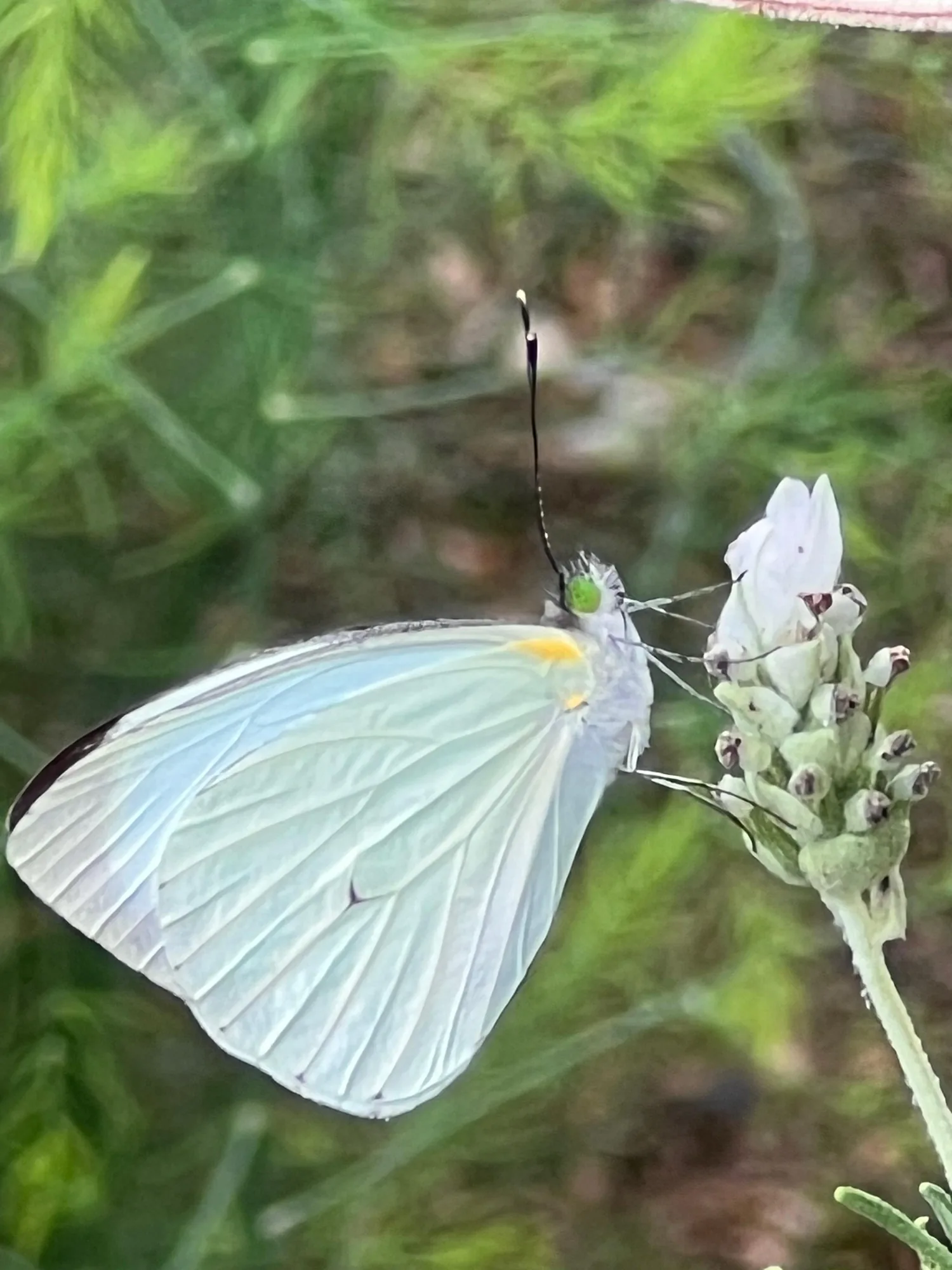
The little white butterfly is fine on the lavender but over the kale row it means I stop what I’m doing and pay attention.
It is the first sign of cabbage worm invading the kale, broccoli, cauliflower, cabbage. If I see one drifting over the leaves I treat it as a warning and not a decoration. Once the worms are established they can chew through the tender leaves before you notice the damage from a few steps away.
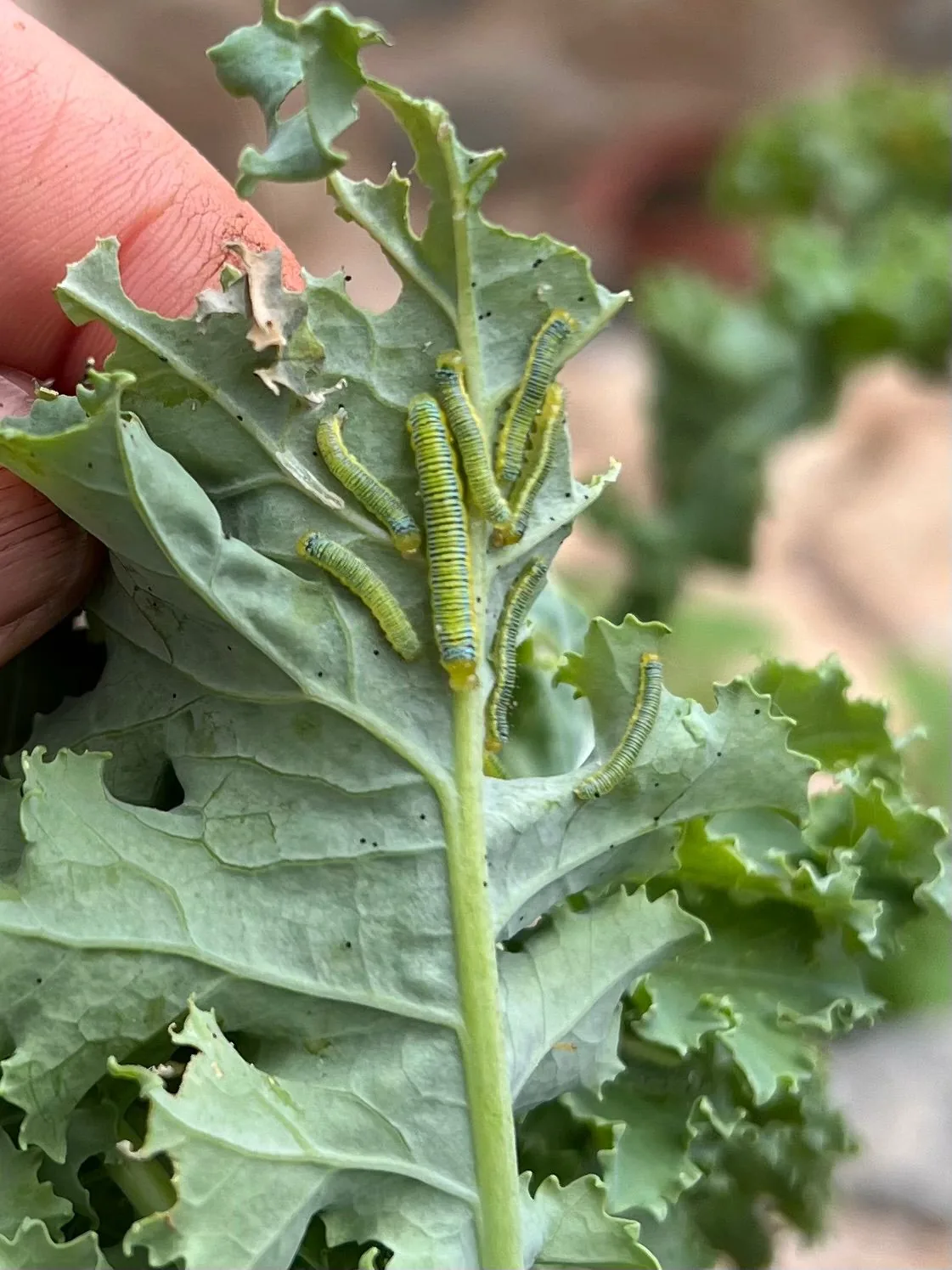
So the work is simple and repetitive. I watch the brassica beds closely and if butterflies are active I inspect leaf by leaf. On curly kale the little golden egg clusters are easy to miss so I turn the leaves over and look slowly. If I find eggs I scrape them off with a fingernail. If I find worms or a chrysalis they go into a small jar of soapy water.
At times I’ll use a light atomized spray, weak homemade castile soap in water with a few drops of neem oil. I use it carefully because hand work here does more than a heavy response and I’d rather not throw too much at the garden when close attention will do the job.
This is the kind of garden routine visitors see when they walk past the garden beds at Rancho 4C, a lot of food is protected one leaf at a time.