Community Notes
Dulce de la Montaña: The Costa Rican Tradition of Trapiche and Tapa Dulce
A family trapiche near San Isidro shows how sugar cane becomes tapa dulce and why traditions still matter in this valley.
A little over half an hour from our place in San Isidro, Perez Zeledon, there is a family trapiche where you can watch sugarcane become tapa dulce the slow way. The sound of the mill taking hold of the cane, the smell of fresh jugo de caña running out, and the smell of smoke and caramel as that juice cooks down for hours.
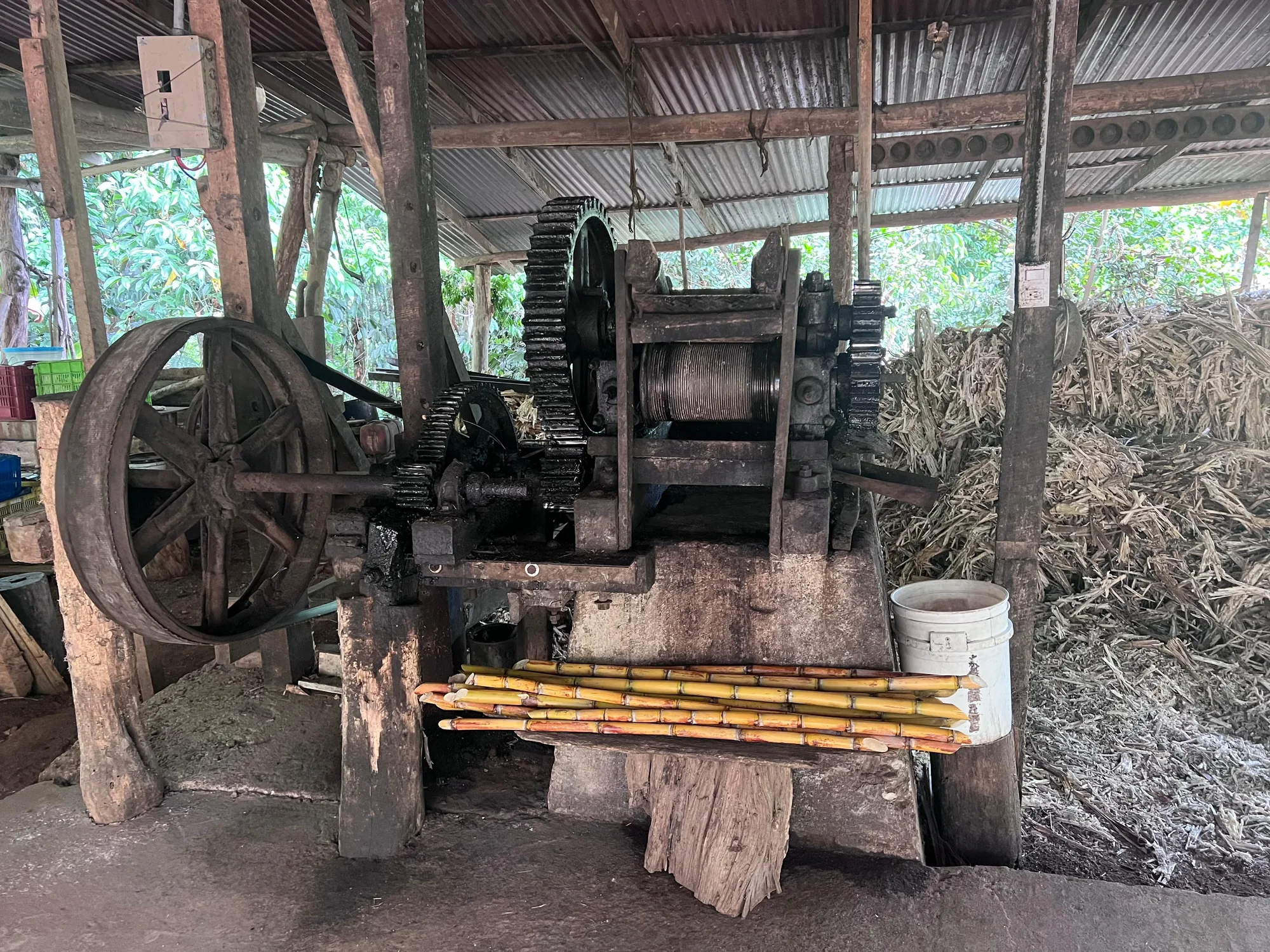
Sugar cane is fed into a mill that is a hundred years old and then pressed for juice. The same old mill that used to require oxen to power has been modernized and now runs on diesel.
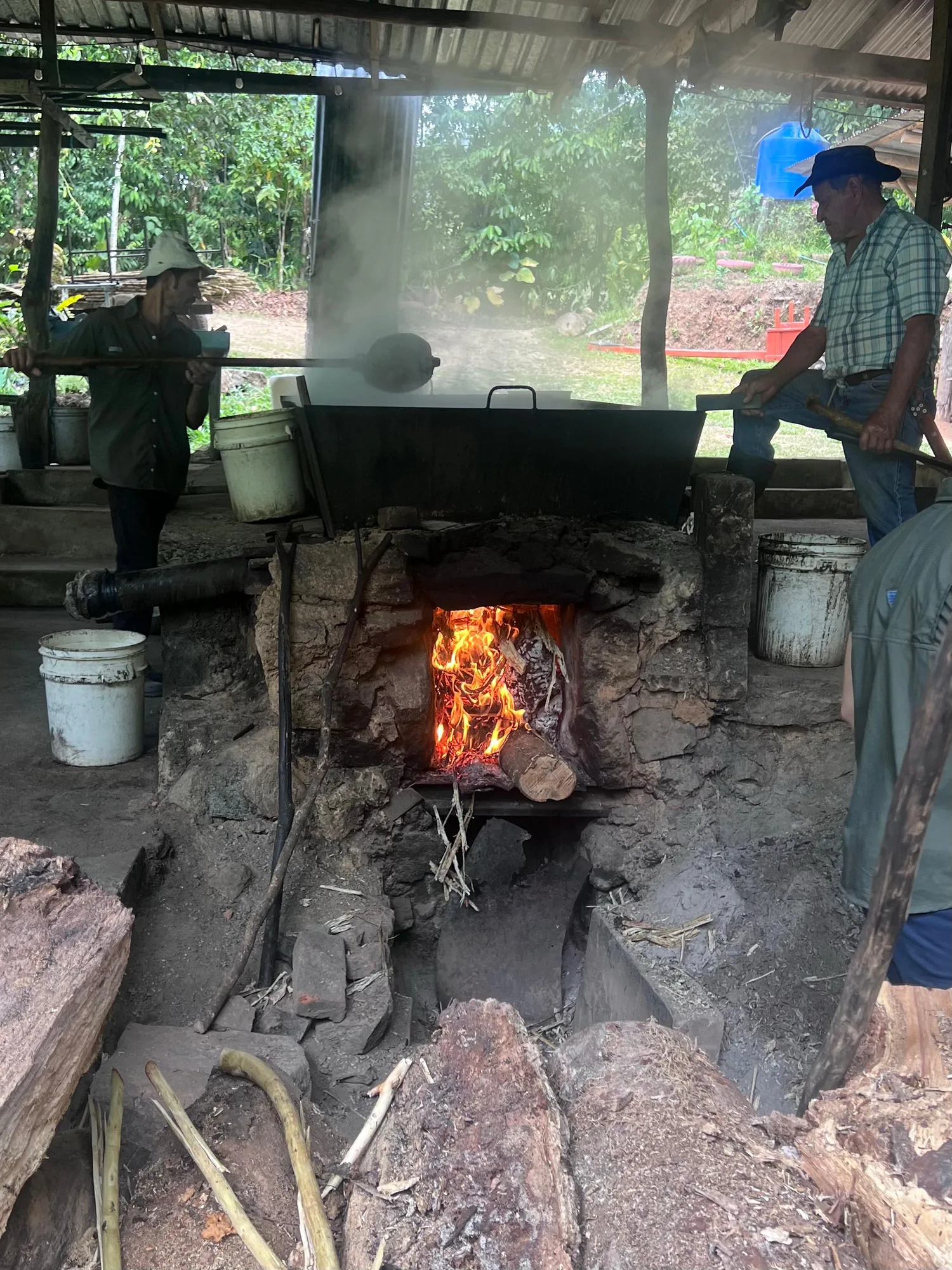
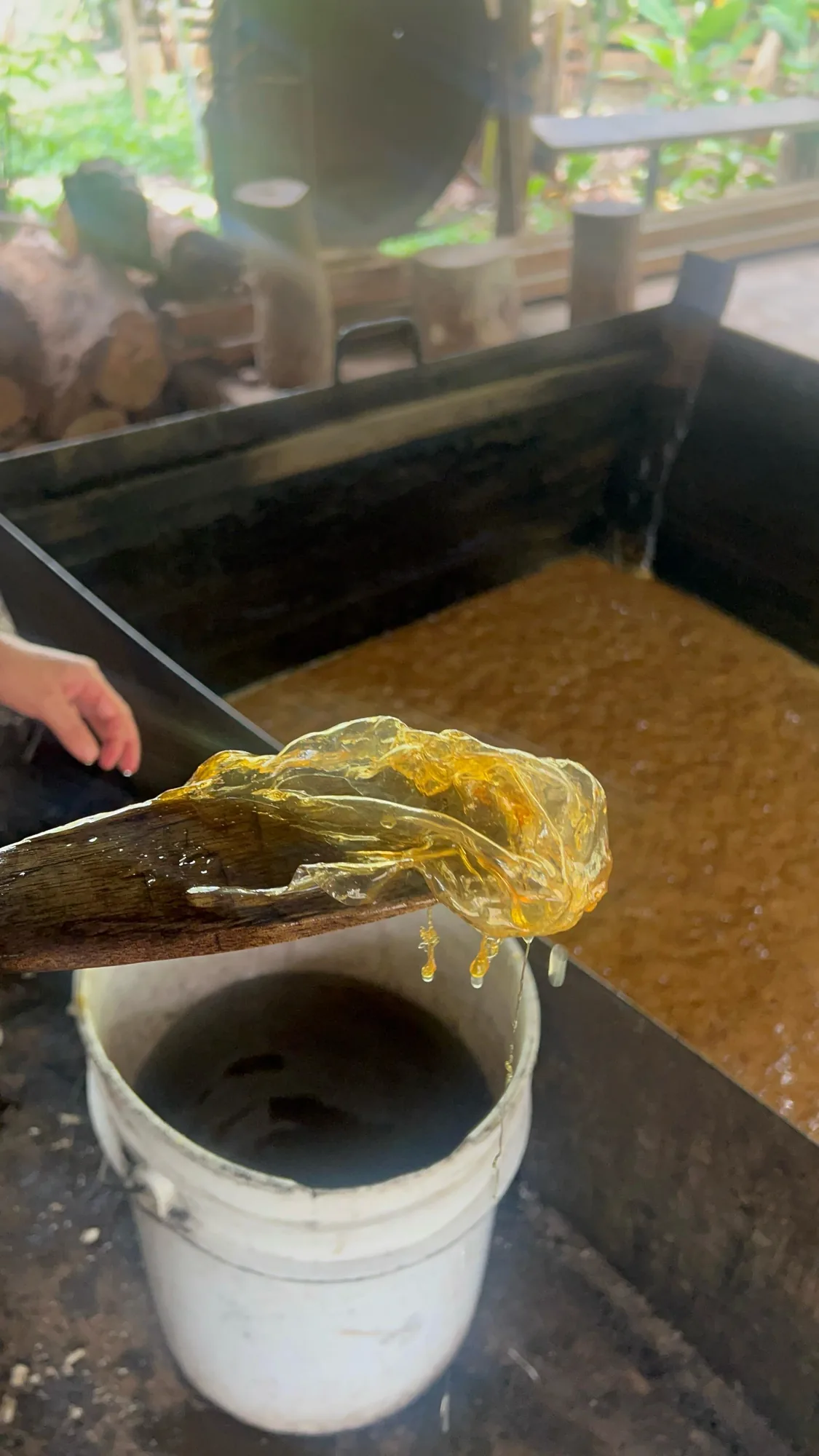
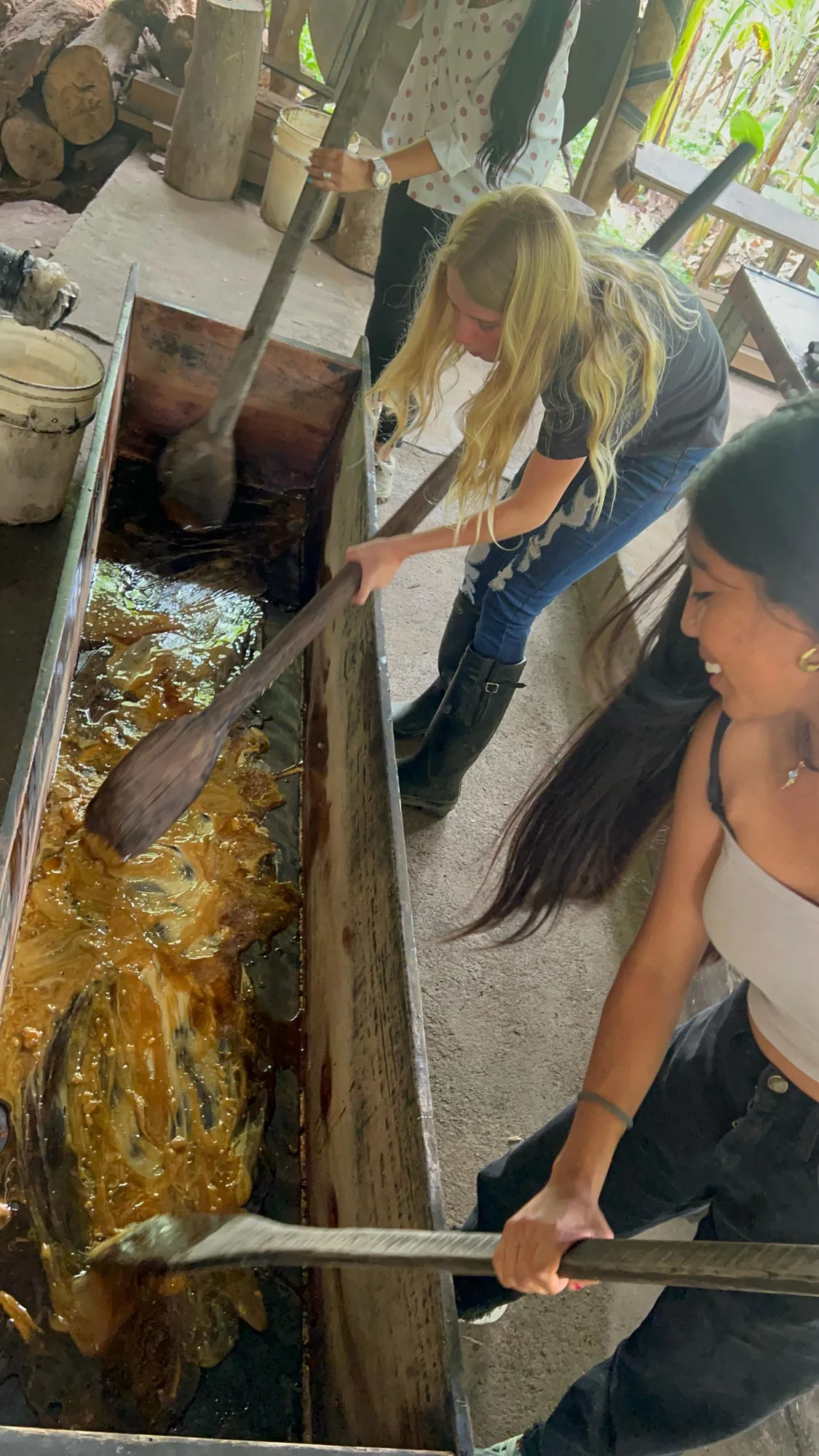
Once the juice is pressed the real lesson begins at the fire. The cane juice is cooked for five or six hours until water evaporates and the liquid thickens from something grassy and bright into something deep, brown and rich. At one stage it is syrupy and chewy, almost like taffy with a caramel flavor.
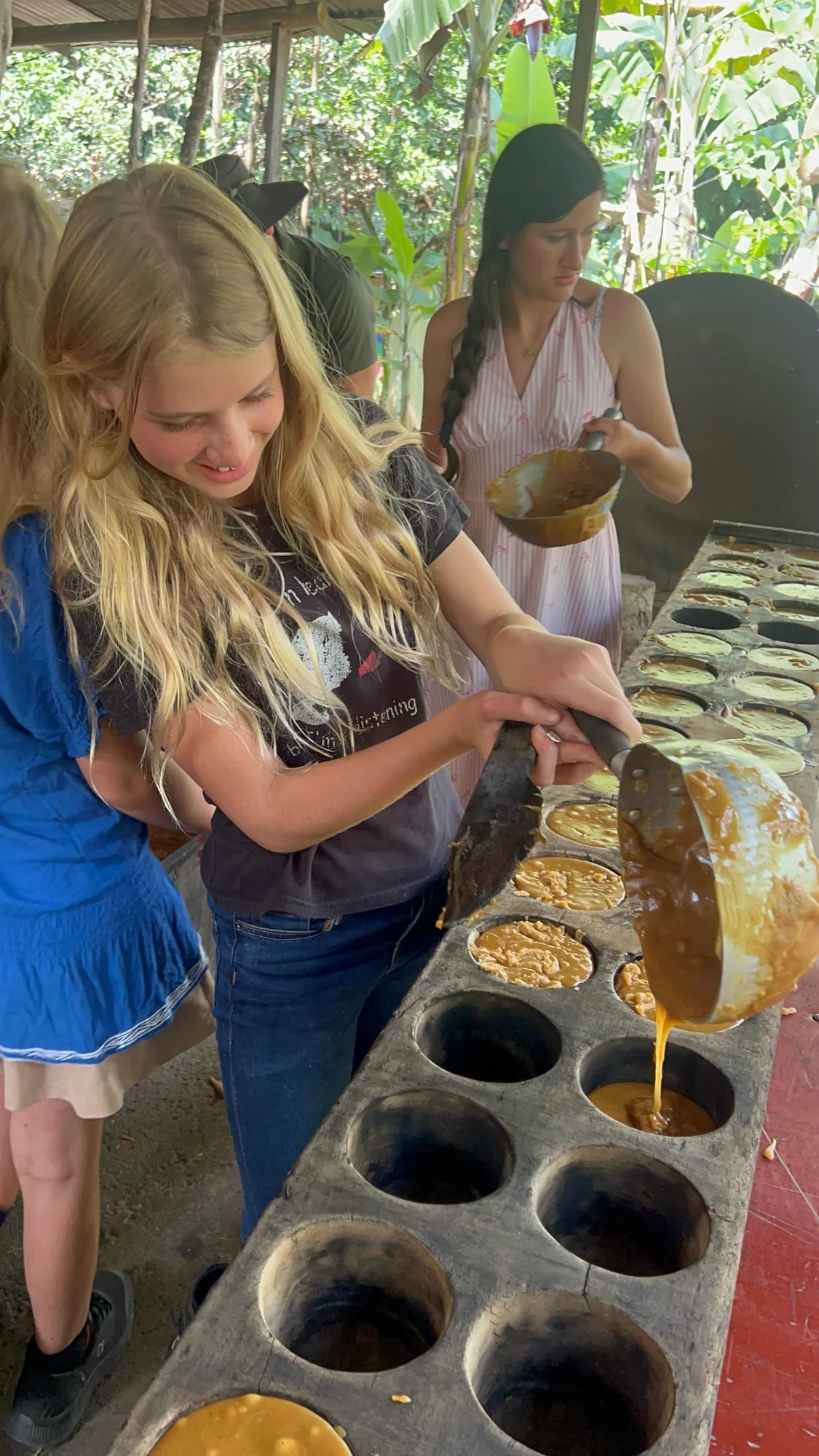
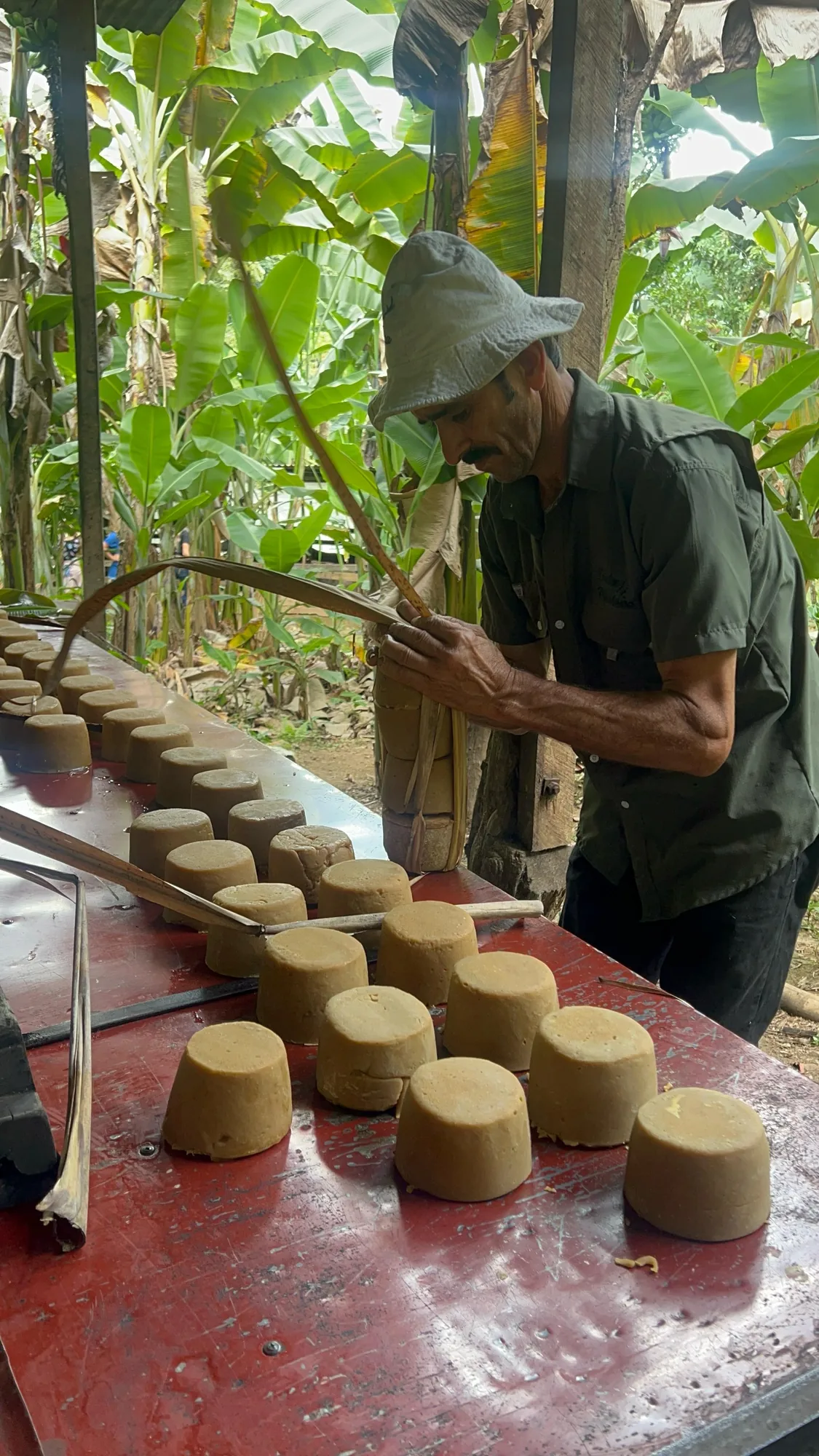
Then the family shows how cooked sugar can go in a few directions. Some of it is worked and swirled into a fluffy, chewy candy, sometimes they add peanuts, sometimes fresh young leaves from the local mandarina, which give it a scent similar to lemon grass after you have rubbed the leaf between your fingers. Then there is the form most people recognize, tapa dulce, poured into wooden molds and cooled into solid blocks.
Another Costa Rican tradition is the presence of the oxen and the wooden cart. Before engines took over, oxen powered mills by walking in circles and turning the grinder. Rural Costa Rica moved on wooden wheels for a long time. Sugar cane, firewood, people, coffee, tools, all of it pulled by oxen in a wooden cart.
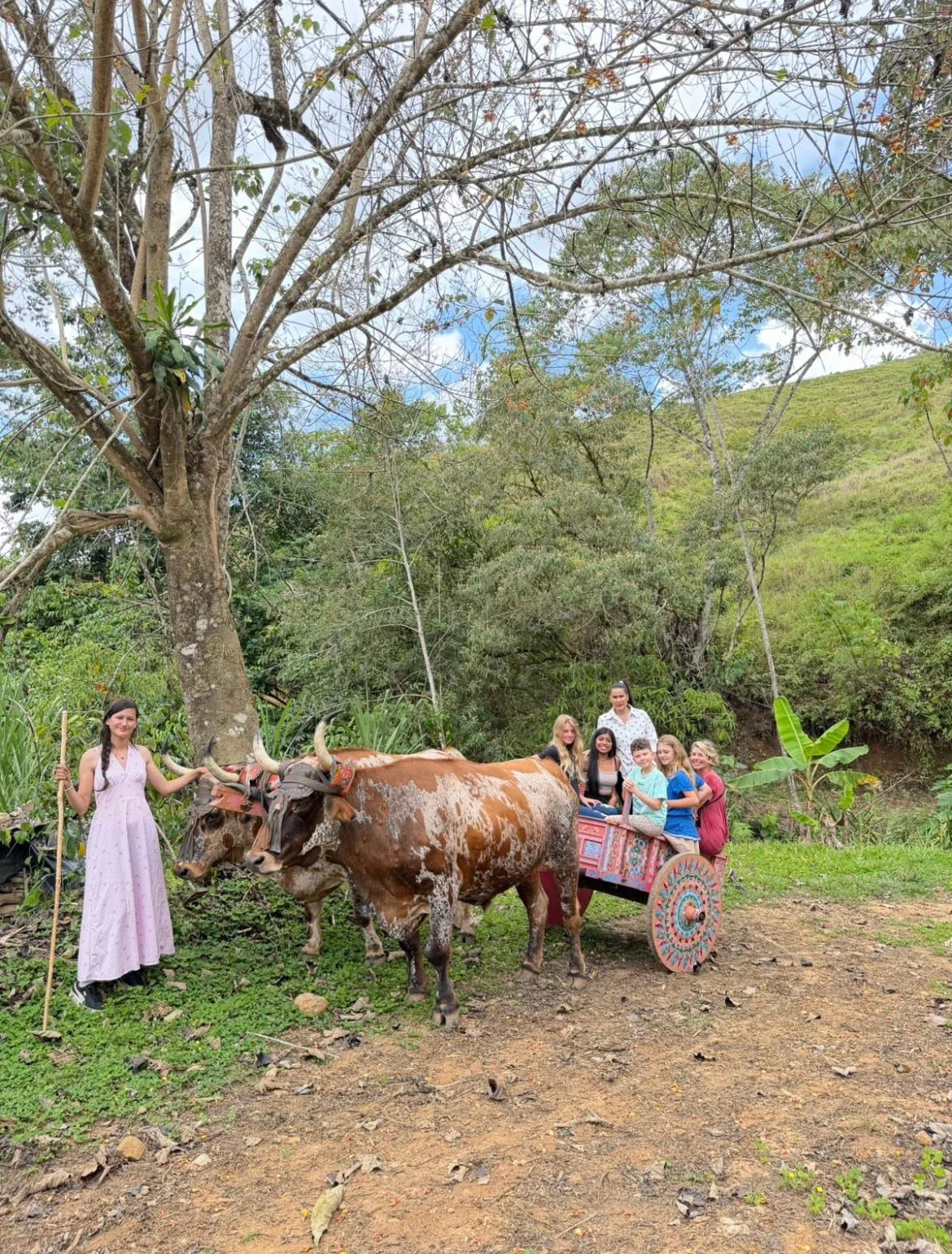
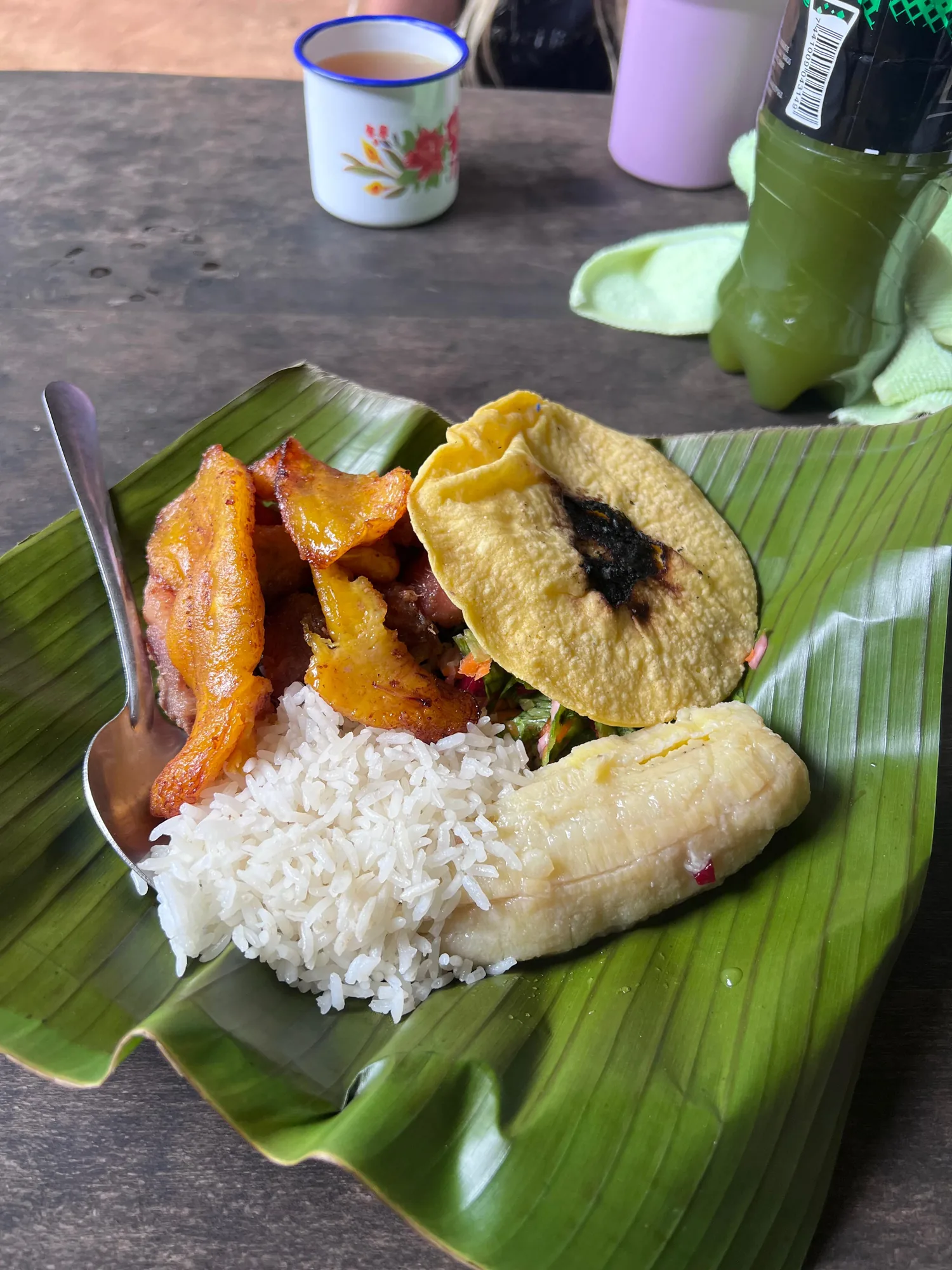
The tour ends up being about more than the trapiche. Visitors can help make candy, taste syrup at different moments, and then sit down to a meal served on a banana leaf with chicharrones, plantains, rice, fresh corn tortilla and lemonada. That matters because it keeps the trapiche from being just a demonstration. It stays connected to the table, which is where agriculture always ends up.
For those staying with us and looking for nearby places to visit from Rancho 4C, this is one of the stops I recommend to understand the valley through food and family farms.